dns · · 10 min read
How to Choose a Cheap Domain: Renewals, Hidden Costs, and Going-Global Pitfalls
Compare three-year .com costs at NameSilo, Namecheap, and Alibaba Cloud International, then check renewals, privacy, transfers, China ICP filing, and account security before you buy.
 Mttao @bearboy80 2,143 words 中文 →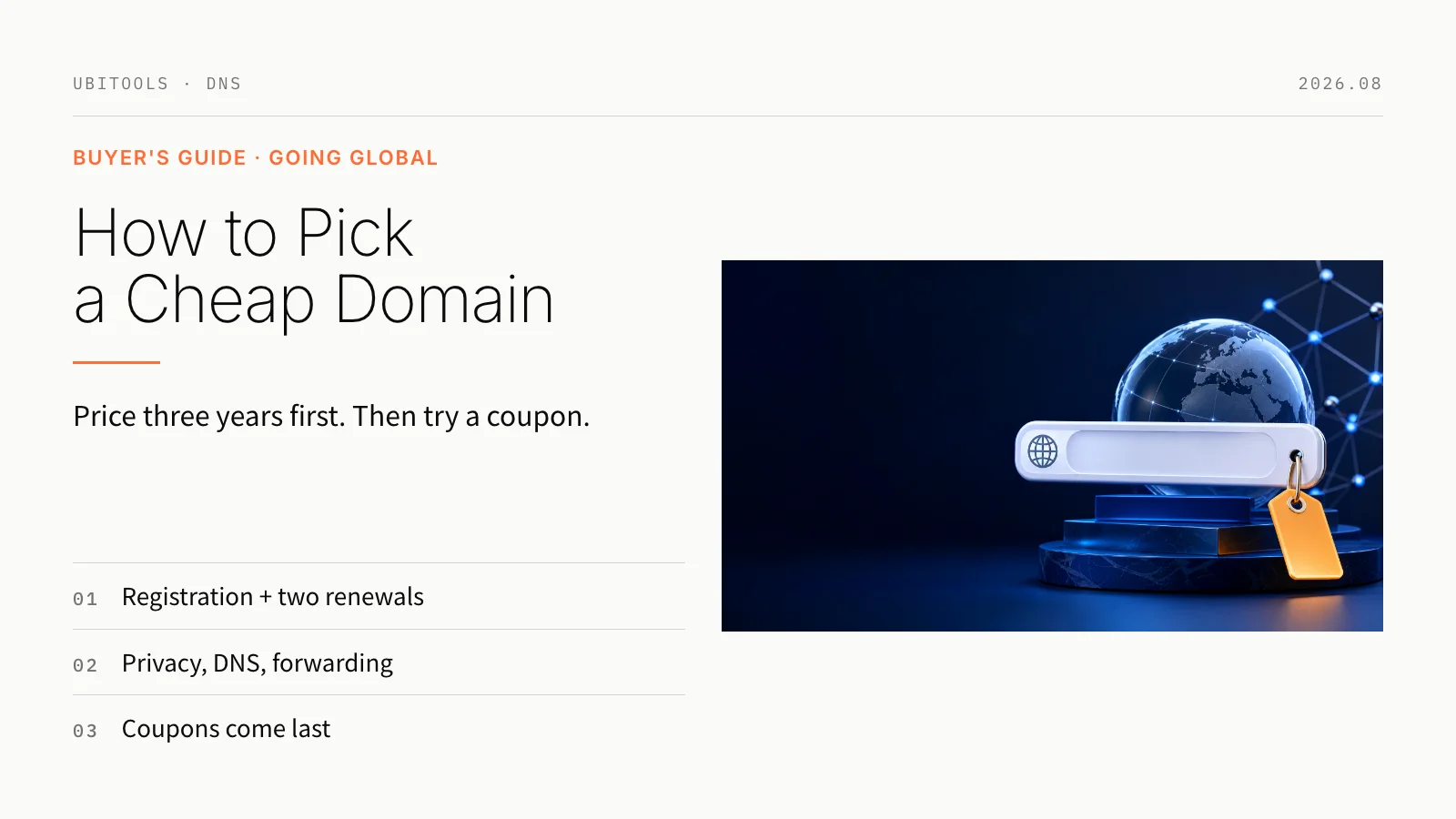
The first time I bought a domain, I only looked at the first-year price. A few dollars on a promo page felt like the smartest deal. After launching overseas sites, independent stores, and content sites, I learned that registration is rarely the expensive part. Renewals, add-on services, account security, and transfer limits are easier to miss.
This is how I compared NameSilo, Namecheap, and Alibaba Cloud International. The point is not to endorse one registrar. It is to take “cheap” apart. Cheap can mean a few dollars less in year one. It can also mean a lower renewal later, or not paying for services that should already be free.
Price three years, not just year one
A domain is not a one-time purchase. It renews every year. If it expires and you have to redeem it, the fee is usually higher, and the site or mailbox can go down with it.
I start with a simple total:
Three-year cost = first-year registration + two renewals + required extras.
Those extras usually include WHOIS privacy, DNS, email forwarding, and a later transfer to another registrar. For a brand domain you plan to keep, those line items matter more than saving a few dollars on day one.

Figure 1: The first-year promo sits above the water. Renewals, service fees, and admin work decide whether the domain is actually cheap.
How I compared .com pricing at three registrars
The table uses the same rules: one ordinary .com, a one-year term, priced in USD, with no tax, premium names, or bulk discounts. Prices move, especially promo prices. Check the cart again before you pay.
The displayed prices came from public pages in August 2026. Alibaba Cloud International still showed $10.59 to register, $11.59 to renew, and $10.59 to transfer on 21 August 2026. NameSilo and Namecheap pricing pages were behind bot checks, so those figures stay at the displayed prices I saw then. The checkout page is the source of truth.
| Registrar | Year-one registration | Annual renewal | Transfer | Estimated three-year total | What to watch |
|---|---|---|---|---|---|
| NameSilo | $17.29, plus a coupon if it applies | $17.29 | $10.80 promo; $11.95 struck-through | $51.87, before coupons | Registration and renewal match, so the math is easy; common extras are free. |
| Namecheap | $11.28; new-user pages may show $6.79 | $18.48 | $11.48 promo; $14.98 struck-through | $48.24, using $11.28 | Low year one, higher renewal. Do not stop at the first promo price. |
| Alibaba Cloud International | $10.59 displayed; $13.99 struck-through | $11.59 displayed; $15.99 struck-through | $10.59 displayed | $33.77 at the displayed price; $45.97 at the struck-through price | The lowest three-year display price in this check. Confirm how long the sale lasts at checkout. |
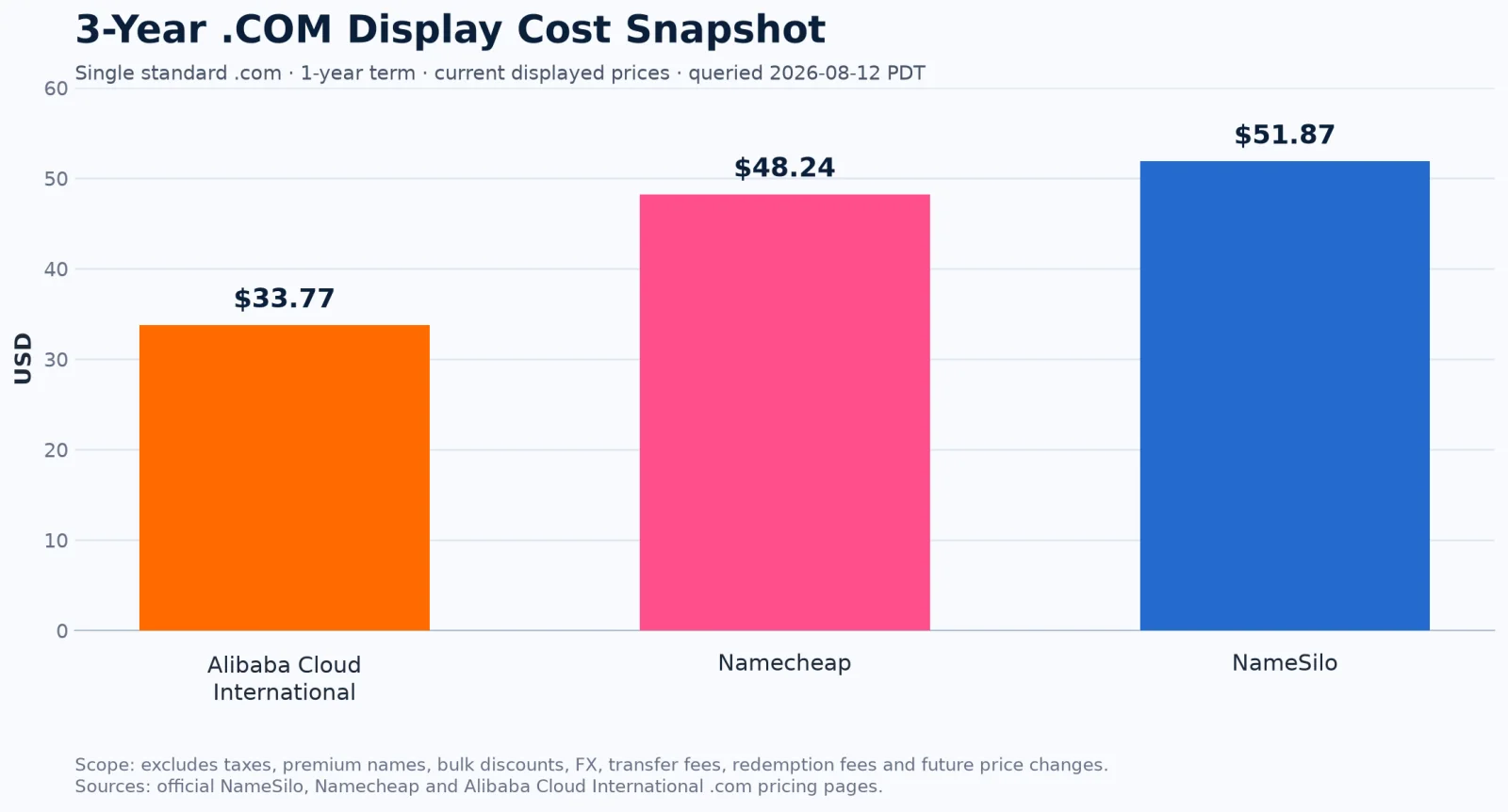
Figure 2: Three-year .com totals using the same method. The chart is for price structure, not a future price promise.
The three registrars price in different ways. Namecheap uses a low first year to win new buyers, then moves to a higher renewal. Alibaba Cloud International showed the lowest three-year total in this check. A single NameSilo .com is not always the cheapest, but it folds several everyday features into the free tier. That gap grows if you hold more than one domain.
For a broader registrar comparison, see the overseas domain registrar guide. For how to submit NameSilo codes, see the NameSilo coupon and savings guide.
Why NameSilo stays on my shortlist for overseas projects
When a project is meant for users outside mainland China, I look at payment, baseline services, and later admin. NameSilo is often easier for buyers in China.
It accepts Alipay. If you do not have a usable international card, or you do not want to open one just to pay for a domain, checkout is simpler.
The pricing page also lists free WHOIS privacy, DNS, email forwarding, and Domain Defender. Privacy keeps the registrant name and email off public lookup pages. DNS points the domain at a site, mailbox, or other service. Those are the basics most independent sites need.
NameSilo also publishes registration, renewal, and transfer prices separately. You can see what this year, next year, and a later move will cost before you buy. That is calmer than waiting until the domain is about to expire.
| Situation | Why NameSilo helps | What I actually do |
|---|---|---|
| No usable international card | Alipay is available | Confirm Alipay, currency, and billing region on the checkout page. |
| I do not want to pay for every extra | Privacy, DNS, and email forwarding are listed as free | Check that the target TLD is eligible. |
| Several overseas landing pages | Baseline extras do not add a per-domain fee | Put every renewal date on a calendar. |
| I want mail at the brand domain | Email forwarding is available | Use it as inbound forwarding, not a full business mailbox. |
| I may switch platforms later | Registration, renewal, and transfer prices are public | Note the renewal price and transfer rules before paying. |
How I use NameSilo coupon codes
New users can try VIP16888 in the cart. Existing users can try VIP123.
I leave the code for last. Pick the domain, confirm the renewal price, then try the code. A coupon may lower year one. It does not automatically make year two or year three cheaper.
These codes are worth trying, but they are not a standing offer and they do not cover every TLD. Premium names and items already on sale often will not stack. After you submit a code, check that the cart total actually dropped. If it did not, treat the code as unused this time.
Alipay, free everyday extras, and a coupon I can still try: those three things cut a lot of back-and-forth on overseas projects. That is why NameSilo stays on the list.
Do not pick a TLD because of SEO myths
“.com is expensive. Will switching to .xyz, .site, or .shop hurt my rankings?” That question comes up a lot.
Google’s public note on new generic TLDs is clear: new gTLDs are handled like other generic suffixes. A keyword in the suffix does not create a ranking advantage. shop.shop or best-vpn.xyz will not outrank an ordinary .com just because they look more “relevant.”
Choose a suffix for three things: whether people can remember it, how long the project will last, and what three years will cost. New suffixes such as .xyz, .site, and .shop are often cheap in year one. Renewals are not always cheap. They are fine for test pages and short campaigns. They are a poor bet if you are buying them for rankings, or treating them as a more “SEO-friendly” substitute for .com.
User habits have not moved as fast as the TLD market. Many people still guess .com when they hear a brand. If someone else already owns that .com, a new suffix can still launch the site, but you will explain it more often. A country-code suffix can make a single-market site clearer. That is positioning, not a ranking shortcut. If you already have a main site, a subdomain or a page is usually cheaper than buying another suffix for every campaign.
| Project type | Better fit | Why |
|---|---|---|
| Long-term brand, company site, business email | .com or a common generic TLD | People remember it and type it without help. |
| Product tests and short campaign pages | A new TLD at a fair price | Ship the page first and keep the budget small. |
| One country or region only | The matching country-code TLD | It states the market without extra copy. |
| A small campaign under an existing site | A subdomain or a page on the main domain | You do not need a new domain for every campaign. |
Transfer before the domain is about to expire
Buying the first year at the cheapest shop and moving later can save money. It only works if you plan the move.
ICANN’s name-holder FAQ notes that a newly registered domain, or a domain whose registrant name, company, or email just changed, may have a 60-day transfer lock. A domain that just completed an inter-registrar transfer can face a similar wait. Do not start researching a transfer two days before expiry.
| When | What to do |
|---|---|
| Registration day | Save the order, payment details, expiry date, and recovery email. |
| First 60 days | Finish the site and DNS. Do not expect an immediate move to another registrar. |
| 45–60 days before expiry | Compare renewal and transfer-in prices again. |
| 15–30 days before expiry | If you need to transfer, start then, and leave time for email confirms and errors. |
Changing hosts, moving the site, or editing DNS is not the same as transferring the domain. In many cases, changing nameservers or records is enough. You do not have to change registrars.
If you need ICP filing, price comes last
If the site will sit on a mainland China server, do not start with an overseas registrar promo. First confirm that the suffix and registrar can complete ICP filing.
Filing needs a domain that is still valid, real-name verification, and a registrant record that matches the filing entity. The registrar and suffix also have to pass the relevant checks. For these projects, the order is: confirm filing is possible, then check renewal, then try a coupon.
The expensive mistake is buying through the wrong channel. Paying a little more to register is recoverable. Moving later, repeating real-name checks, or waiting through review again costs more.
Basic security worth doing on any cheap domain
A low price does not make the domain unimportant. If it fronts a site, customer email, a login, or a payment page, do these first.
| Action | Why |
|---|---|
| Turn on two-factor authentication | A leaked password is less likely to open the account. |
| Register with an email you will keep | Recovery and renewal notices both go there. |
| Enable the domain lock | It is harder for someone to transfer the name out quietly. |
| Use auto-renewal and a calendar reminder | Do not rely only on the registrar’s email. |
| Limit account access | Revoke access after contractors leave or staff change. |
Keep the list of people who can change DNS or account details short, and keep two-factor on. CISA’s DNS account-security guidance treats account control and locks as baseline protection.
One last checklist before you pay
| Ask this before checkout | You can proceed when |
|---|---|
| Is year one a sale price? | You know when the sale ends. |
| What does next year’s renewal cost? | You confirmed it on the price page or in the cart. |
| What will three years cost? | You added year one plus two renewals. |
| Do privacy, DNS, and email forwarding cost extra? | You know which items are free. |
| Did the coupon actually apply? | The cart shows the discounted total. |
| Can you transfer later? | You know the 60-day lock and how much time you need before expiry. |
| Do you need ICP filing? | If yes, you already checked the suffix, real-name status, and registrar. |
| Is the account locked down? | Two-factor, recovery email, domain lock, and renewal reminders are on. |
I now buy domains in four steps: decide the use case, price three years, confirm the account is easy to live with, then try a coupon. The domain that wins is not always cheapest in year one. It is usually the one that costs less to keep and creates fewer follow-up chores.
References
- NameSilo pricing and free services
- Namecheap
.compricing - NameSilo promotions and coupon rules
- Alibaba Cloud International
.compricing - NameSilo Alipay
- Google on new top-level domains
- ICANN name-holder transfer FAQ
- Huawei Cloud: domain prep before ICP filing
- CISA DNS account security
Prices in this article are for comparing structure, not a checkout promise. Promos, renewals, and coupon codes change. Confirm the official page and the cart total before you pay.
Mttao GitHub ↗
Exploring technology and life's wisdom